The Journey
According to every single law of physics, finance, economics, transnational borders, diplomacy and visa politics, there was no way my family and I could have gone for Umrah last December. There was no way I could afford it for all four of us. Our visa also literally came in just two days before flying (Bangladeshi citizen perks). But, as the age old saying goes, “Jab Uparwala deta hai toh chappar phadke deta hai”. And I finally came to appreciate the power of Allah’s invitation, which can arrive at any time regardless of who you are or how you’ve lived your life, so long as your intentions are pure. Rakhi Sawant has completed Umrah 8 times I heard. When the moment comes, nothing can keep you away from what’s been written for you.
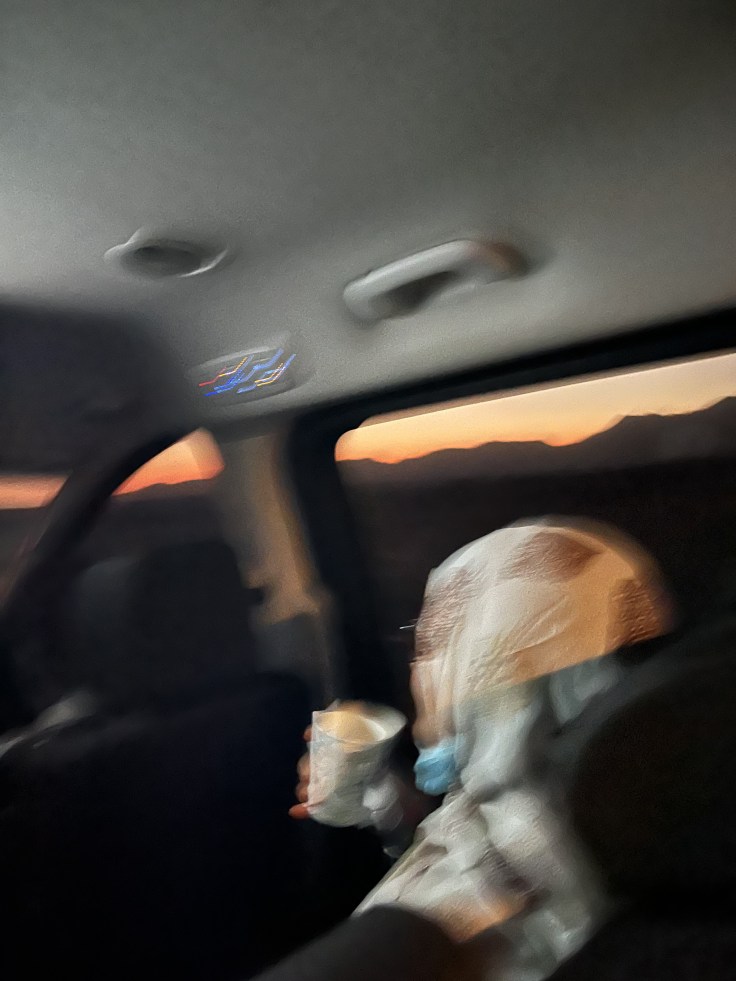
After completing a 14 hour journey (where Saudia Airlines lost my luggage—for good apparently 😂 so pro tip: pack light in a cabin luggage and carry it with you instead of checking it in), we arrived bone-tired and bleary eyed in Jeddah, the historical gateway for pilgrimage. En route to Makkah, I sat back and took in the miraculous sight of my dad and my brother in their ihram, golden rays of the sunrise filling the car and spilling out over vast expanses of craggy stone mountains and dry land. It was a sight so foreign and fascinating to someone used to the evergreen hills of Hong Kong. Our driver played the Quran softly in the background, which smoothed over the trials of the journey and lulled us into a gentle slumber.
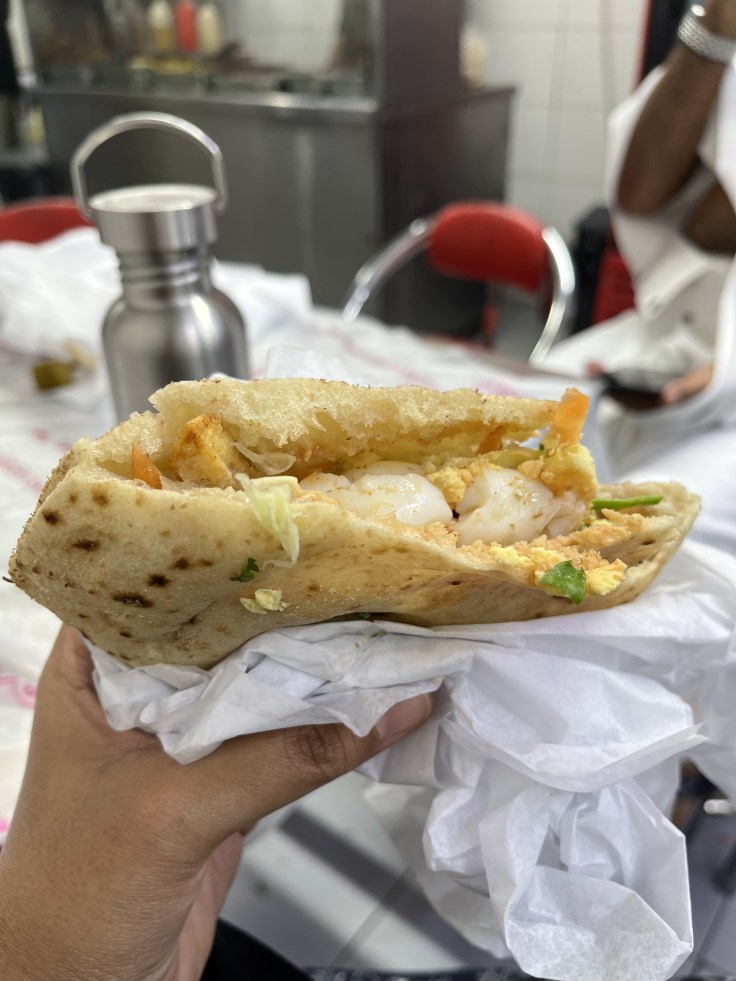
When we arrived at our hotel, our rooms were still being prepared so we walked over to a tiny Egyptian breakfast place nearby. When I tell you the 6 riyal (12HKD) egg pita sandwich literally changed my life, please believe me. Another miracle from Al Wahhab (the Giver of Gifts). The two hours we needed for our rooms to be ready passed by like a breeze. The cities of Makkah and Madinah are just like that—living miracles. Every hardship you endure will be met with a blessing and immediate relief from Allah, if you stay patient and wait for relief to come.
Long March to Masjid al Haram
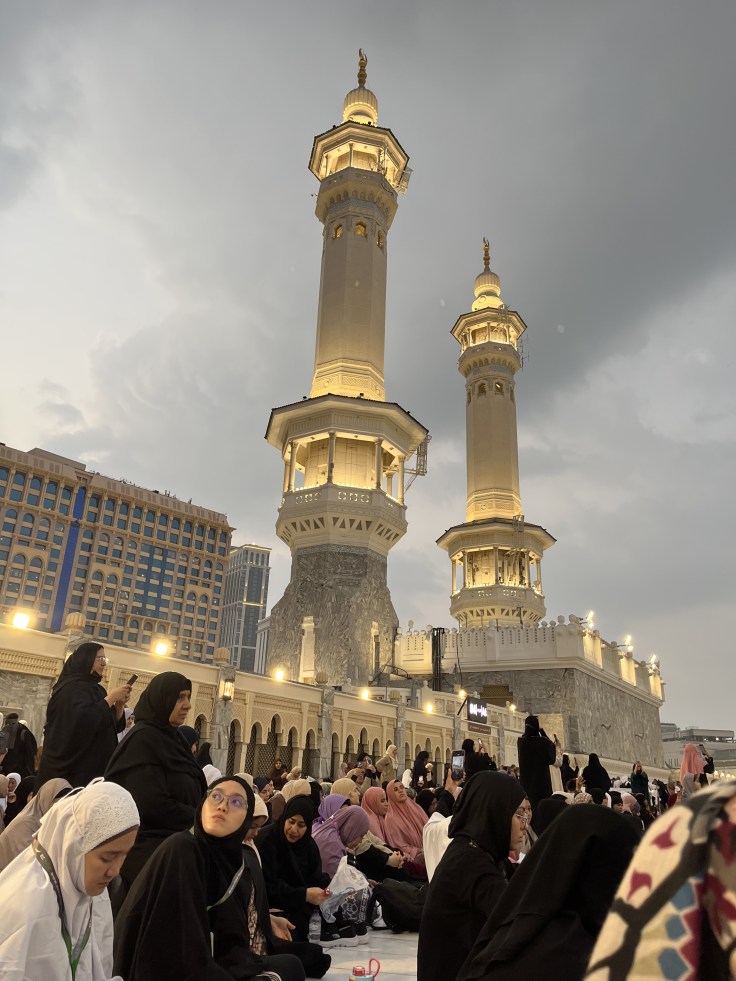
In the afternoon, we stepped out to join the other pilgrims on their way to Masjid al Haram. I felt my heart lift and almost exit my ribcage as I walked shoulder to shoulder with thousands of people from all corners of the world heading towards the same direction; the direction we’ve prayed towards our entire lives. Everyone chanted the Talbiyah together as we got closer and closer to the mosque—a profound prayer that directly answers God’s call.
“Labbaik Allahumma Labbaik. Here I am, Allah. Here I am.”
I held my mum’s hand as we bobbed along with the crowd, something I haven’t done since I was a kid. Together, we disappeared into the folds of tens of thousands of pilgrims.
The Miracle of the Kaaba
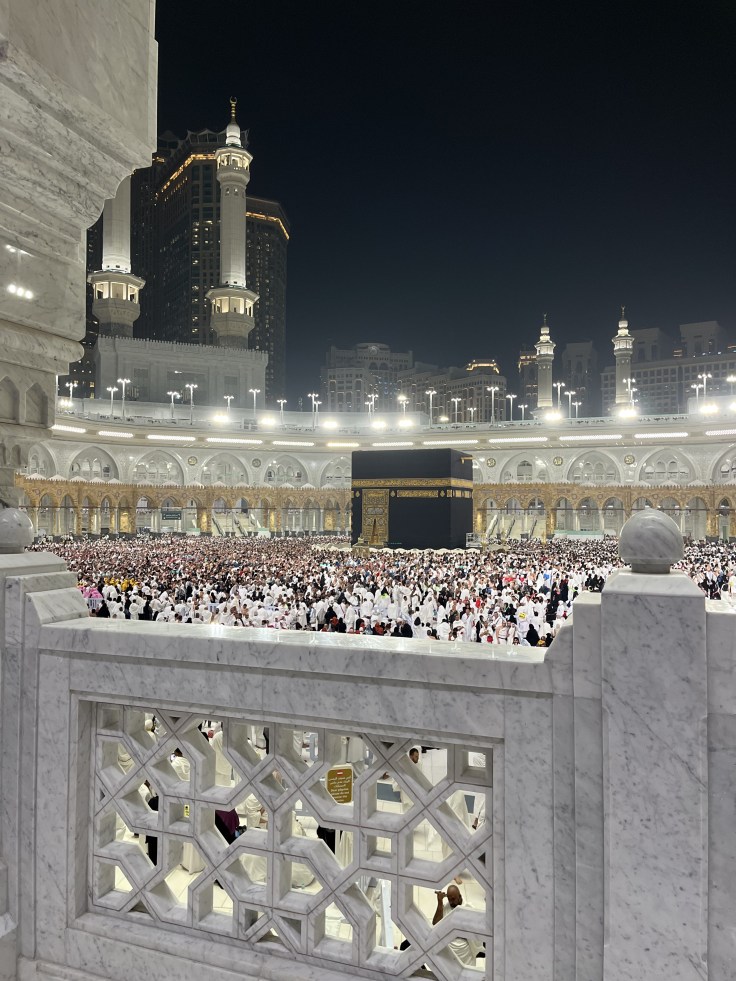
The rites of Umrah begin in the large marble compound surrounding the sacred Kaaba, called the mataf. According to tradition, people keep their gaze lowered as they walk towards the Kaaba so that their heart is spiritually focused and not distracted by the crowds or the surroundings. It is a deeply personal experience and your energy needs to be protected accordingly. Upon your first look at the Kaaba, it is said that the prayers you make right then will definitely be answered. The spiritual and emotional energy contained in this sacred space is hard to describe in words.
We inched forward, eyes lowered, walking in tandem with all the other pilgrims and carrying the enormous weight of our collective hopes and dreams on our shoulders, until we were ready to catch our first glimpse. And when my eyes were finally raised, it felt as if the universe stopped for a moment. Inside my head, I dove through layers of galaxies. A star had exploded inside my heart, like a dam giving way—and then my prayers flowed. I’d spent months writing down what I would ask for, but in that moment I surprised myself with which prayers came first, meaning they were at the forefront of my consciousness this entire time.
And then we began our tawaf, which is the rite of circling around the Kaaba seven times. Like everything else in creation from atoms to galaxies, this ritual signifies a life revolving around Divine guidance. While walking, I thought about the Kaaba’s celestial counterpart which sits directly above called the Bayt al-Ma’mur, where a legion of 70,000 angels performs tawaf every single day. I was walking not just with the pilgrims who were physically present with me in this realm, but the angels of the celestial realm as well.
At the end of the ritual, we stopped to drink some zamzam and I couldn’t help but marvel at the sight in front of me. How was it possible that thousands of people could be gathered in one space, and yet the only noise I could hear was a soft and gentle hum? Where there should have been chaos and overstimulation, there was only peace on the mataf. I leaned on a pillar and watched the pilgrims circle the kaaba, mesmerised by their swirling movements. It was a microcosm of the universe and everything that resides in it, revolving around one thing and one thing only: Allah (God).
I stood and watched for a very long time.
Crying at Sa’i
There were many moments where I felt a surge of emotions but for some reason, Sa’i was where I really couldn’t hold back my tears. The ritual of walking seven laps between the hills of Safa and Marwa commemorates Hajar (AS)’s search for water for her infant son Ismail (AS) in the middle of the empty Makkan desert and her unwavering faith in God’s provision.
Ibn Abbas (ra) narrated, ‘She stood on it and started looking at the valley keenly so that she might see somebody, but she could not see anybody. Then she descended from As-Safa and when she reached the valley, she tucked up her robe and ran in the valley like a person in distress and trouble, until she crossed the valley and reached the Al-Marwa mountain, where she stood and started looking, expecting to see somebody, but she could not see anybody.’ [Tafsir Ibn Kathir]
Hajar (AS) ran between Safa and Marwa seven times, calling on Allah for help and believing truly that her situation would change. And change, it did! She heard the voice of the Angel Jibril (AS), who dug his heels into the earth, from where zamzam water flowed miraculously. That same well still gives out water today, and is consumed by millions of pilgrims annually when they come for Umrah and Hajj.
During Sai’i, there is a row of green lights where men in particular (if able-bodied and healthy) are instructed to run, jog or walk faster every time they cross it, to emulate the distress Hajar (AS) felt when running between the mountains. My tears fell freely as I saw fathers jog underneath the green lights, holding the hands of their young sons, and elderly men trying to move a little faster with the support of their canes, to try and emulate the pain of a mother. It’s such a profound experience, and I pray everyone reading this will have the chance to experience it one day (or again if they already have!!) insha Allah.
Love in all its Forms
Wherever you go, whether it is in Makkah or Madinah, you will be blessed with the ability to see love in all its worldly and divine forms—love and mercy between parents and their children, siblings, strangers (but really, brothers and sisters in Islam), travelers, spouses, friends, pilgrims and God—it is all there to see for those whose eyes are open. When we did the tawaf again on the upper floor of Masjid al Haram, I finally had the space to not just focus on my own prayers, but also experience the beauty of so many forms of love gathering in one place. A son pushing his elderly mother’s wheelchair, a child happily playing and dancing around her parents, the energetic young volunteers expertly pushing wheelchairs of elders who came on their own through the crowds, not once showing their tiredness even though they’ve been working all day.
Even if people roamed around the sacred grounds of the twin cities alone, they would be blessed with the presence of love both worldly and divine. Either you become a vessel for that love, or you become a vessel for receiving that love. For example, by keeping a bag of sweets on you at all times to give to any kids you see—a habit I picked up from Turkish and Indonesian girls my age—you become a vessel of God’s love for the children there. By offering to carry a young child and be responsible for them for the 5-10 minutes it takes for their mother to pray peacefully, you become a vessel of God’s love for her. When you smile at the women around you after the prayers end, young and old, you become a vessel of God’s love for them. When you wander the prayer halls alone and a stranger offers you fruit or a cup of zamzam, they become a vessel of God’s love for you. Our human minds can’t even fathom the number of permutations this divine love has, and will continue to have so long as our hearts and minds are awake.
What a blessing it is to love and be loved; far more euphoric than the one-dimensional side of romantic love shown in movies, and simultaneously so much more rooted to the ground and to reality. So much more accessible to anyone and everyone on earth.
A Lesson on Packing, A Lesson on Life
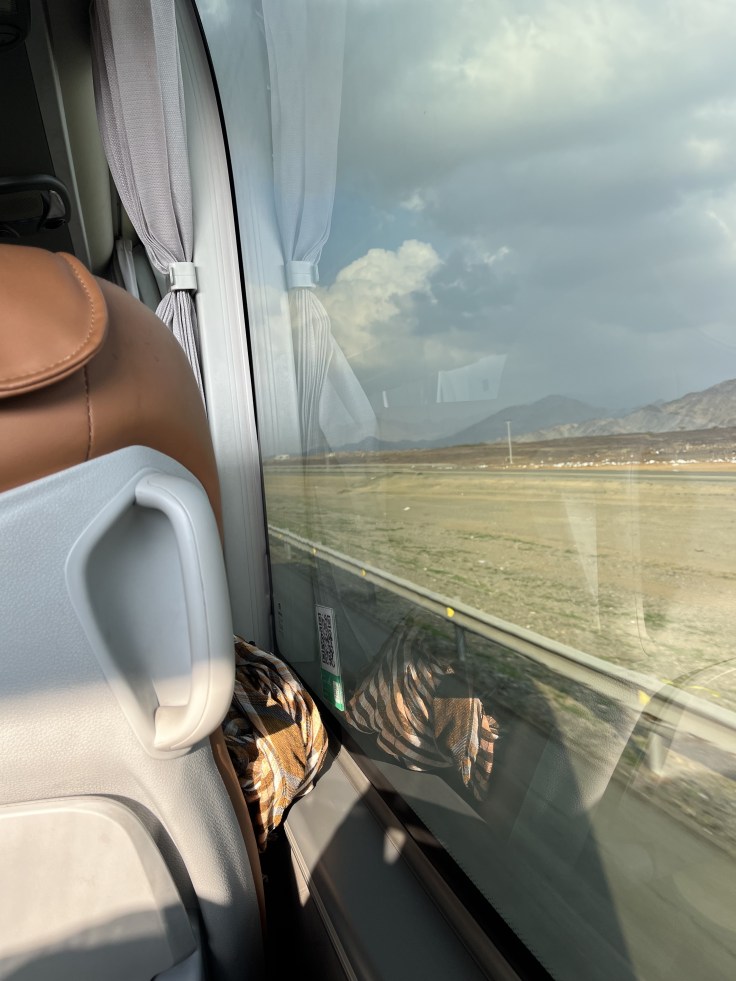
A weathered old man carried nothing but a small cloth bag and the clothes on his back. As a neurotic overpacker myself, I watched him, mouth agape as he boarded our bus bound for Madinah. He was a vision of calm against the crowd carrying multiple luggages and clamouring for space. He had no need for space, for he was just one. He sat in front of me, and laid his head gently on the windowpane to rest. For the rest of the journey, as I watched the sun’s rays gently touch the frayed edges of his well-worn turban, I couldn’t help but wonder:
Who was this old man?
How did he figure out the secret to life itself? (Tawakkul)
How can I become him?
There are so many more reflections to be done, especially related to the sites we visited and their connections to stories from the Quran, Seerah and other Islamic traditions., hopefully in a future follow-up to this post. Until then, friends, I thank you for accompanying me to the end of this post. May Allah accept all your duas and bring you to his Abode (perhaps again? And again?) soon.


Leave a Reply