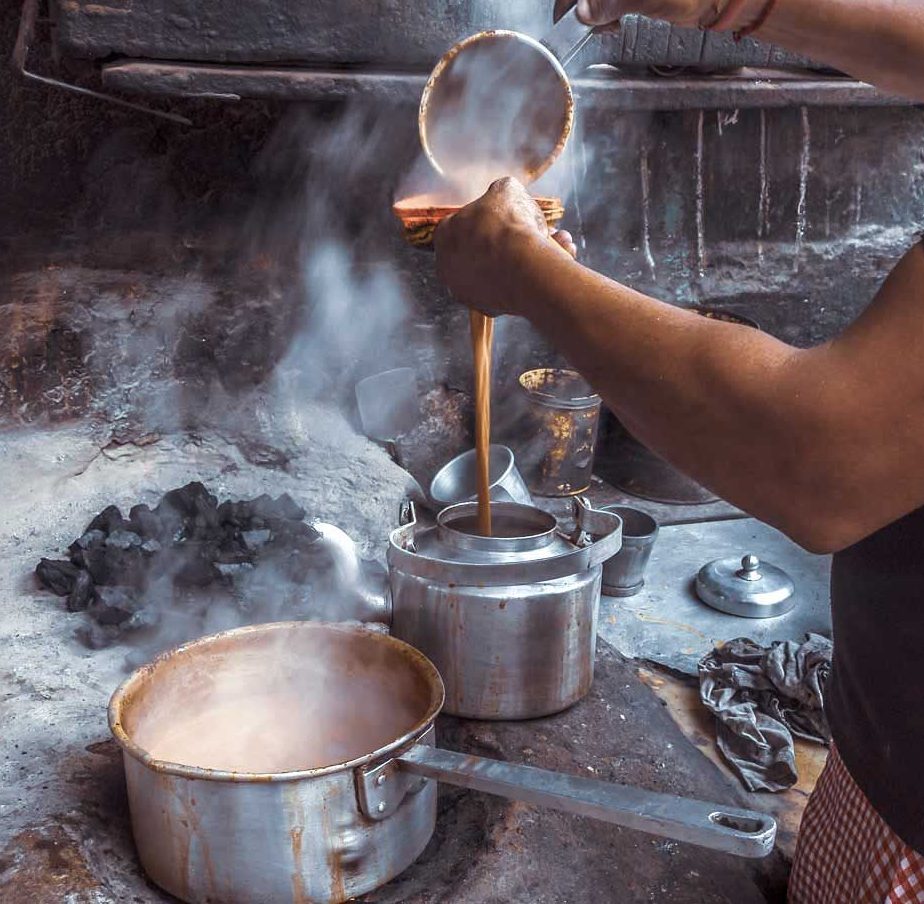
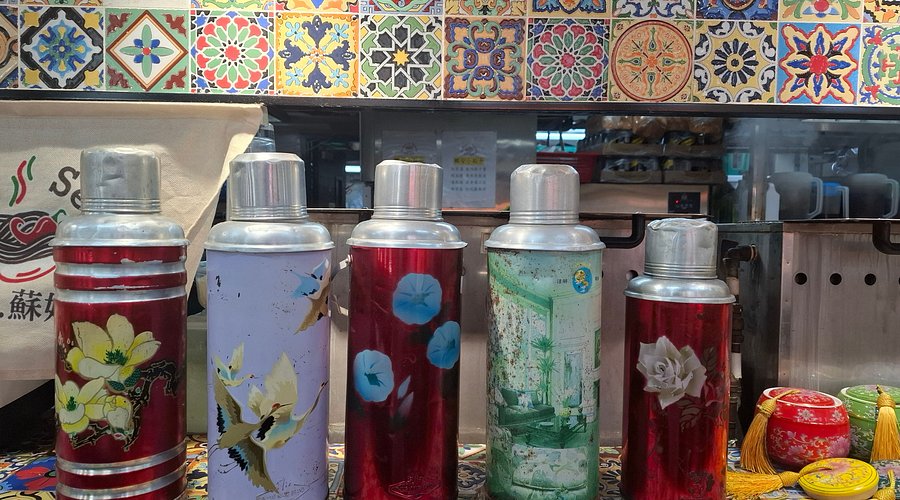
Earlier this summer, I met up with a friend on a hot and humid June afternoon. The recent rains have been a huge relief to Hong Kongers, so much so that we’ve been compelled to utter a word of gratitude after complaining nonstop about frizzy hair and humidity. Just before another burst of showers fell upon us, we quickly ran into Kedai Kopi Semua Semua in Sham Shui Po, part of a well-established kopitiam chain in Hong Kong.
We were ushered to a table by the tall wood-framed windows and asked for an afternoon favourite: bubbly Ipoh white coffee for me, pulled teh tarik for my friend, and the legendary pandan kaya toast for the two of us. At 5 pm, the place was teeming with people. We were sitting elbow to elbow with mums or migrant caretakers who had just picked up their kids from school, elderly po pos and ye yes laughing loudly and catching up with their friends or reading the paper, and young couples grabbing a bite after work. Taking in the vibrant sights and sounds of the packed shop, I was struck by how rich the kopitiam experience in Hong Kong is, and how much it still has in common with its other Southeast Asian counterparts.
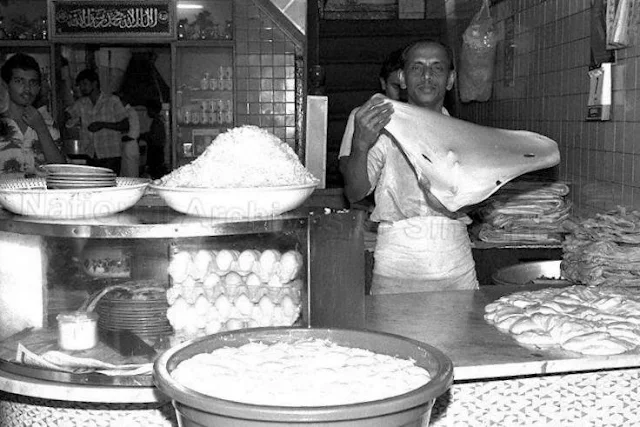
A kopitiam is a traditional coffee shop mostly found in Southeast Asia. The historical Hong Kong chain Kedai Kopi Semua Semua and other standalone shops like Kopitiam Bagus Bagus were established in Hong Kong by early Malaysian-Chinese migrants in the city. The word kopitiam itself is a reflection of its diverse history. “Kopi” is Malay for coffee, while “tiam” is Hokkien for shop. Their most common manifestation is as a tiny little shop buzzing with communal energy, the only adornments being simple wooden furniture sitting on top of vintage floor tiles.
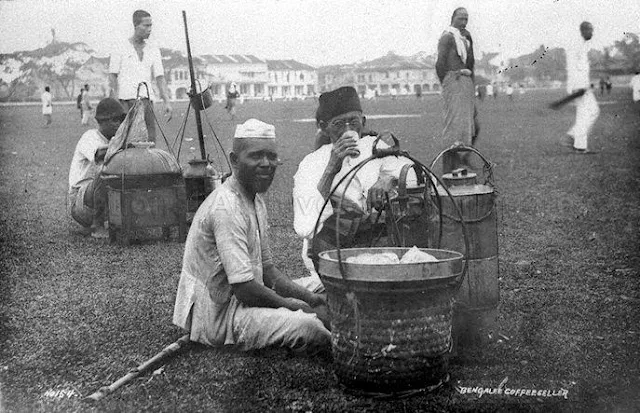
Apparently, coffee wasn’t a new concept to people in Singapore back then. Bengali coffee hawkers used to sell kopi from baskets slung across their shoulders long before the Hainanese kopitiam existed. But Hainanese-style kopi is uniquely in how it’s brewed: by putting ground coffee beans into a long muslin sock and pouring hot water through it (similar to how milk tea is traditionally brewed in Hong Kong’s cha chaan tengs). This process is repeated a few times to extract the most amount of flavour from the coffee beans. Their history is fascinating and you can find more details in Johor Kaki’s blog post here.
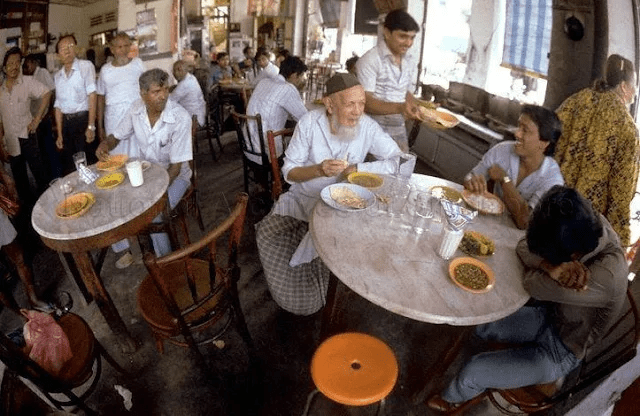
A brief excerpt on the colonial history of kopitiams from Singaporean native Cheryl Lu-Lien Tan for the New York Times:
“[T]he kopitiams that first proliferated in this former British colony in the 1900s [were] created when Chinese men who had been hired to cook in expat homes began leaving and opening coffee shops to offer cheap meals to a growing working class. These Chinese cooks introduced the British habit of drinking coffee to Singaporeans, along with staples like toast and eggs for breakfast. The coffee they served up was unlike any found in Western coffee shops, though; because the cooks could often afford only cheap beans, they enhanced their aroma by wok-frying them with margerine (or lard) and sugar. The resulting basic kopi is a cup of thick coffee, strained through a cloth sock several inches long and packed with teaspoons of sugar and sweet condensed milk.”
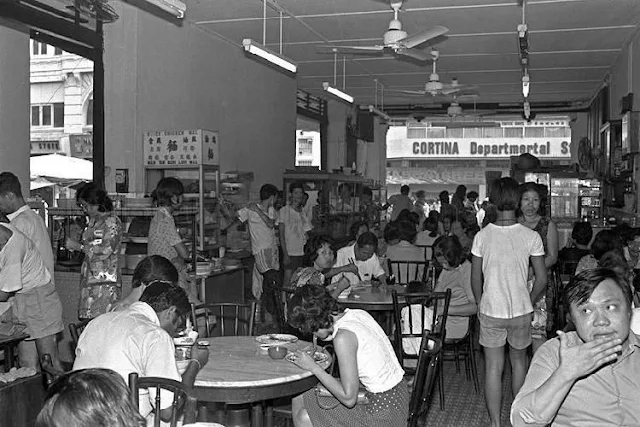
My favourite thing in a kopitiam is the traditional cup they use—an icon of these establishments. The cups are small, squat and very thick around the edges to keep the drinks hot for longer, and usually come with a saucer too. Intricate green or blue floral motifs are painted on white porcelain so they look fancy enough to make customers feel respected, but not so fancy that they end up feeling self-conscious instead.
Everything in a traditional kopitiam is designed to keep customers in for as long as they wish and to have as many conversations as they want—the quintessential third space. Something I sorely wish other eateries in Hong Kong would work hard to preserve too. But right now, sitting in this quaint kopitiam with the rain pouring outside, I am allowed to stretch my limbs and engage in relaxed conversation without fear of being shooed away after 90 minutes. In a rare instance in this city, I am allowed to simply exist and breathe. And enjoy a damn good kaya toast and bubbly Ipoh white coffee (though of course Singapore better la).


Leave a Reply