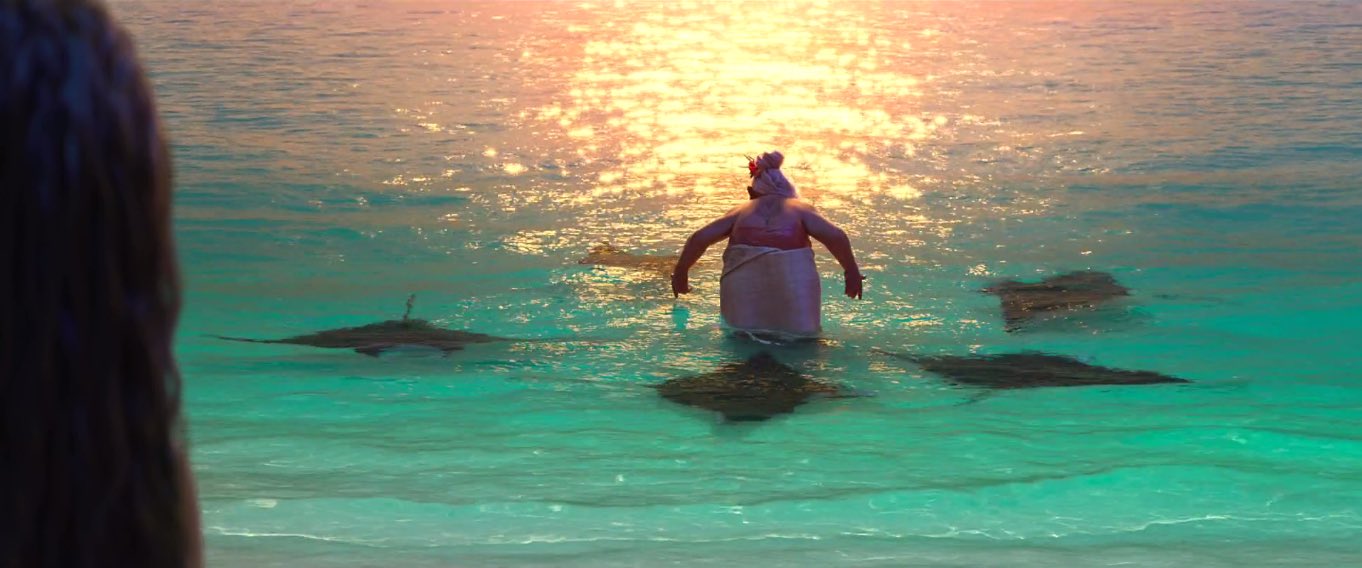
I might have a bit of an obsession with the ocean. I’m not entirely sure why, but I know it’s there because I saw Moana in the theatre 4 times and cried at each screening (this was pre-Disney boycott. Then there’s the small fact that my family and I have never actually lived too far away from the sea—we’ve been chasing water since I came into this world. I was born in the coastal region of Chittagong, in southern Bangladesh, and everyone (I mean everyone) I love is stationed there, which explains why I’m always itching to go back. Even today, hastily planned “sea beach” (an endearing Banglish term) excursions are met with the exact same excitement my cousins and I had when we were kids. It’s a lovely emotion that’s quite difficult to capture in English—the feeling you get when you’re eating warm jhal muri by the sea as a cool evening breeze whistles past, like a guardian ruffling your hair gently.
There is a beautiful poem by New Zealand-based writer Michael O’Leary called ‘Okahu Bay’ that might help explain my disposition (and perhaps yours!) better. It’s about a man who returns to his hometown after many, many years and reminisces about his childhood while trying to re-establish his connection to the land. I chose to share the stanza below (with Māori translation by Jean Wikiriwhi) because it captures this man’s complex emotions with such simplicity and ease, yet its effect leaves you spellbound.

Connections
Years ago, my friend and I were musing over this connection while sitting at a pier during the summer holidays. It was a hot sunny day and we were swinging our legs above the water, lost in (only semi-deep) thought. “Maybe it’s because we’re Bangladeshi,” she blurted out after a long pause. I watched as her ice lolly melted and trickled down her arm before plopping into the sea. She had a point. Around 700 rivers flow through the country, constituting a waterway that is over 24, 000 kilometres long—this is why why Bangladesh is known as the ‘Land of Rivers’. It’s why the country so green and so fertile. And it’s also why we’re in danger every time monsoon season comes around.
A significant part of Bangladeshi (and Bengali) culture revolves around the bodies of water that permeate our land—from our food to our art to our folk tales. Even our natural disasters are directly tied to water. A shocking
We are and have always been sea-faring people, and perhaps that is what we first need to acknowledge and harness in order to make it through the coming decades of rising sea levels and dangerous weather.

A VERY RIVERINE MAP OF BANGLADESH (SOURCE: WIKIPEDIA COMMONS)
Folklore
Nearly every Bengali kid has grown up hearing some version of the Aleya lights story, but don’t let their beautiful name fool you. According to local legends, these flickering balls of light are thought to be the ghosts of fishermen who lost their lives at sea. In parts of Bangladesh and West Bengal, the Aleya lights can be found hovering above marshes, swamps and bog lands.
Fishing communities around these areas believe that the Aleya lights operate in two ways. The first category of lights are feared greatly because they are thought to lure people to their deaths by putting them in some sort of trance (which, of course, can appear in any form depending on their preference), and then drowning them. Bad spirits, probably enjoyed reading Katie Hopkins’ tweets in a previous life. The second category of lights however, could well save your life by guiding you around dangerous swamp creatures or leading you back to shore if you are lost. Good spirits, probably enjoyed brunch and listening to Seu Jorge in a previous life. These lights have also been spotted in other parts of the world and are known under many different names that vary from region to region, from England’s will-o’-the-wisps to Brazil’s boi-tatás.

AN ARTIST’S DEPICTION OF A WILL-O’-THE-WISP. (SOURCE: GOOGLE)
Blue Planet
With all this being said, I really do think all human beings have a special connection with the ocean. Think about it: the only reason this planet is habitable is because we have water. Human dependence on the ocean is almost incalculable. Almost. More than 3.5 billion people rely on it as their primary source of food, and it is no secret that many of them are also among the world’s poorest. Over 90 percent of the trade between countries is carried by ships and underwater cables pick up and facilitate approximately half of the communications between the world’s nations.
There is a reason why three-quarters of the world’s mega-cities are coastal. The ocean sustains us, and it always has. It is said that life itself arose from the deep sea. And because of her vastness and mystery, her grip on the human imagination will remain as powerful tomorrow as it had been when our ancestors were sailing from island to island, continent to continent. Our answers lie there: to finding equilibrium and a connection to everyone else on this planet. And I’ll find them…. once I learn to swim, that is.


i come from a coastal town which used to be an ancient port for trade with Egypt, Rome, Greece (according to Wikipedia, at least 🤣). i understand trade with the Arabs is most likely how Islam spread to my town. we also had (and still have, to some extent) many people engaged in the jewellery business with their Sri Lankan counterparts with Colombo right across the ocean from us; none of which would have been possible without the ocean herself!!
LikeLike
This history is so fascinating and I’d love to read more into it!! Thank you so much for sharing ❤
LikeLike