Smell is a powerful thing, it really is. I live near a Chinese graveyard so there’s no shortage of old ladies climbing up the hills every weekend to burn offerings for their loved ones. Some things smell quite nice when burning, like paper notes and mini wooden houses. Others, not so much. Once, my neighbour came across a resident trying to burn a rubber tire because she had a dream that her nephew’s car in heaven had broken down. The entire housing estate ended up smelling like the Narcos opening sequence for two days.
The only other source of smoke is of course the crematorium behind the graveyard but I think everyone has collectively decided to ignore it because no one wants to deal with the fact that they’ve been sniffing dead people this whole time. I really love the smell of smoke coming from burnt offerings though, because it is so familiar to me. One whiff has the power to transport me thousands of miles away to the kitchens in my dad’s village.
Whenever I pass by a burn bin here, all I have to do is close my eyes and suddenly I’m standing on a dusty lane surrounded by two rows of bamboo and tin houses. I’m also wearing a charming but slightly hideous sweater-shawl combination but that’s part of my mind’s teleportation deal. If I turn left, I’ll be standing next to my grandmother’s kitchen which is located just outside our house underneath a giant coconut tree. I’m going a bit biased when I say it is one of the loveliest places on Earth, but it genuinely is.
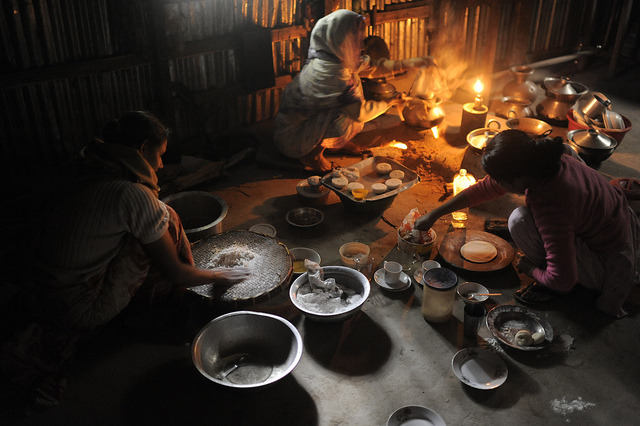
Behind dadu’s kitchen is a large patch of trees and our village’s pukur—a man-made lake that serves as a fun meeting point for everyone, a giant communal bath, and a place to wash dishes and clothes. It’s also a common backdrop for some seriously scary stories but that’s for another time. At night when the electricity is out, the place looks terrifying which is why my brother and I run to the kitchen for dinner like this (screencap below) while holding our kerosene lamps.

The Kitchen
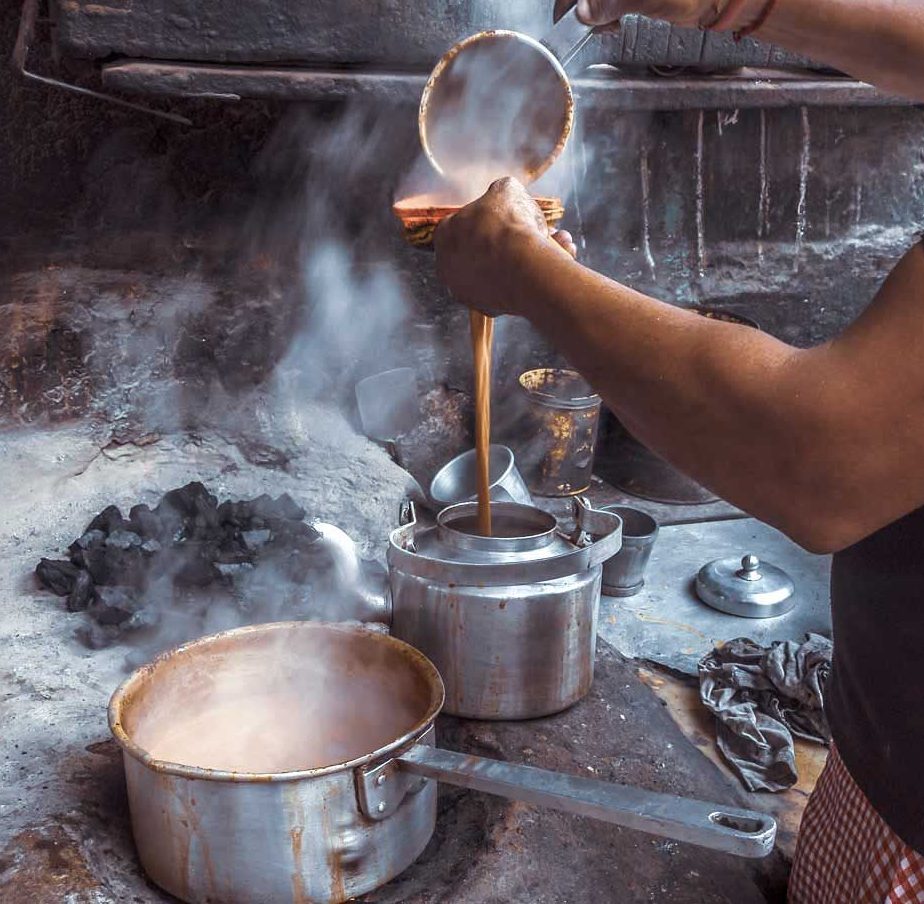
Many rural kitchens across the Indian subcontinent have stoves that are made of mud and you refuel the fire with twigs and leaves every hour or so, which is why there’s always a large pile ready at the back. (By ready, I mean ready for practical kitchen usage and not for a seven-year-old to jump into like a pile of autumn leaves when they think no one’s looking. Very bad decision. Many regrets. For sure I am missing a bone from my rib-cage.)
Something is always bubbling away on the stove because we love making stews and soups in the winter. Side note: you haven’t really lived until you’ve tried Bangladeshi-style white radish stew (sometimes also cooked with beef) when it’s freezing outside.
Woodsmoke mixed with the scent of the trees and the earth is something that will always be magical to me. It’s the smell of home. It’s also really versatile because it helps keep all the young people warm while we’re playing badminton in the evening under our high-tech floodlight system—nine torches held together by rope and lodged on top of a wooden pole or grumpy teenager.
Breakfasts in the village
I love breakfasts of all kinds. It’s such a comforting meal filled with promises of a good day ahead. But my favourite kind of breakfast is the winterbreakfast in my dad’s village (I think it’s a word—I think it’s a Swedish word). If something special is being prepared, everyone will gather in the kitchen but normally we eat in the living room, arranging all the dishes at the centre of a large pati (a woven bamboo mat). And if my brother and I want to switch things up, all we have to do is walk over to the house opposite ours where our extended family are staying and hang around their kitchen doorframe like street cats until the tea is passed around. That’s the thing I love about my dad’s village and it’s going to sound sooo corny to jaded folks but it’s true: people’s doors and hearts are always open there.


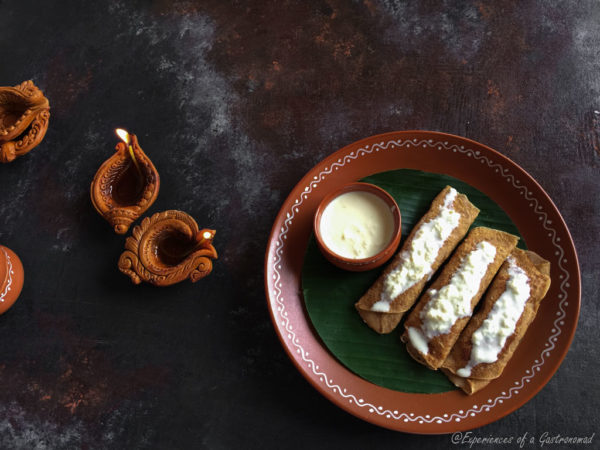


AN ASSORTMENT OF PITHAS. SOURCE: GOOGLE IMAGES
What is a pitha?
Now’s probably a good time to explain what a pitha is. There’s no word for it in English and the easiest way to describe it is that it’s a kind of cake or pie or cookie (I know this isn’t helping), and is usually sweet though savoury versions exist too. Pithas are very versatile and can range from pasties to crepes to everything in-between. One of my favourites is the bhapa pitha, a steamed rice cake filled with coconut and jaggery and served with a warm, smoky syrup made with date tree molasses. I found an adorable Winnie the Pooh-style anecdote about date tree molasses in this Daily Star article and have been dying to share it with everyone I know ever since:

Pithas come in many shapes and sizes but all of them made by hand and with a lot of love. They demand a lot of time and labour but there is so much joy in rolling and shaping dough by hand inside a warm, cosy room while you’re surrounded by the musical chatter of three generations of women. Each family has its own secret pitha recipes and carving techniques, and they’re passed down from generation to generation. And today, YouTube plays no small part in helping to disseminate this unique piece of cultural heritage to both young urbane Bangladeshis and those living abroad.
Most pithas are prepared seasonally as part of harvest season festivities, and that is why they are considered symbols of joy and celebration. For me personally, they also represent family, warmth, and resilience because this rustic culinary tradition has firmly stood the test of time. I also think pithas are a beloved winter staple because it’s the only time you can huddle around a stove with your cousins and aunts on a cold, misty morning and warm your hands over the woodsmoke without being chased away by a broom.
♠
It’s strange how far the smell of smoke in Hong Kong can transport you.


Great post 😁
LikeLiked by 1 person
Thank you! 🙂
LikeLike