Everyone remembers what they were doing during the first few months of 2020, when the entire world suddenly found itself stuck at home in the middle of a deadly virus outbreak.
I was jumping from one exciting TV show to the next, often leaving midway because something else had captured my attention. To make up for my (perceived) lack of productivity and social life, I turned to hours and hours of entertainment and busied myself with the details of fictional characters’ lives, gradually losing touch with the current realities of the physical world.
This entire spiel left me high and dry because somewhere at the back of my mind, I knew I was losing precious time. Where I should have been making big career moves and networking with people (again, this “should” is just a perception), I found myself huddled under a blanket re-watching Indian award shows from the 2000s instead. All while thinking (like everyone else my age) that my life would be over if I didn’t make it big before my 25th birthday, which was fast approaching.
With all these anxieties floating around and clouding my vision, I was in prime condition to explode. That is, until a miracle came along with its easy breezy swagger, and told me to not take life so seriously.
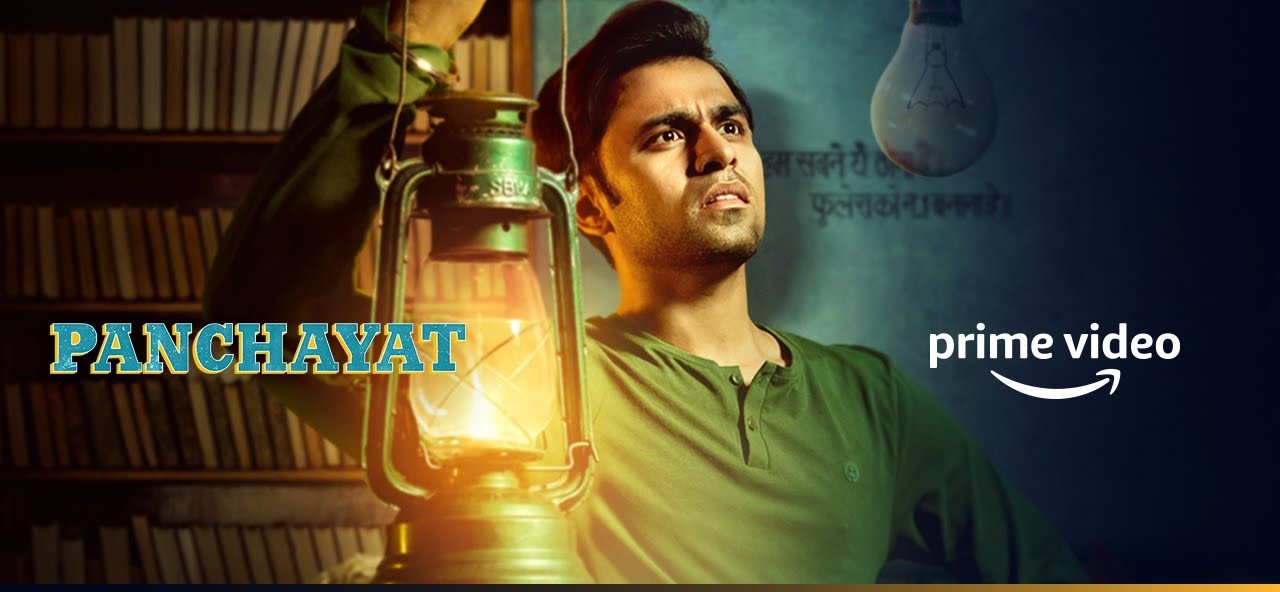
Panchayat is unlike anything I’ve ever seen before. The total lack of narrative, quirky cast of characters, and daily misadventures of the village council genuinely made me believe that there’s good in everything we do, and magic in every dull and boring moment of our lives. Even while stuck at home, if we made an effort to pare everything down and pay attention, we would be able to see this magic for ourselves. Something about the show’s quirkiness brings Wes Anderson to mind, but rather than floating away from the boundaries of daily life (and logic), Panchayat is firmly rooted in countryside soul and wisdom.
For a while at least, I let myself be lulled by the warm embrace of this wonderfully simple miniseries.
In the show, we follow Abhishek Tripathi, an engineering graduate from Delhi who is forced to take up a secretarial job in “Rural India” due to a lack of job offers in the city. At some point, his friend points out he’s going to have an experience just like SRK in Swades, echoing my exact thoughts. Abhishek’s new home? Phulera, a tiny village-town in UP where the most interesting attraction is a 2-storey water tank. The ‘plot’ of the whole show consists of Abhishek’s daily misadventures with an oddball mix of Phulerites, who also happen to be his colleagues.
A big part of the charm of Panchayat comes from the relatively slow pace of each episode, often centred on just one simple activity like getting a passport photo taken in the town centre or trying to decide where to install solar lights in the village. To Abhishek, this new panchayat (village council) job feels almost like an exile order, and his frustration grows more and more palpable by the day and I think that’s why people resonated with it so much in the ongoing pandemic. In 2020, a lot of our social and professional relationships had to be reconfigured (remote work, remote friendships, moving back in with parents etc) and everyone was struggling with the sudden change, and an incessant feeling of stuck-ness.
One of the key reasons why Abhishek feels stuck in the village is because he’s programmed to be on the go constantly, with a thousand responsibilities and distractions hanging overhead. But when his life suddenly gets pared back to the absolute basics, he slowly learns why basic things like manners, face-saving and relationships are essential to our survival as healthy human beings in society.
The main sparks or clashes on the show sprout from the simple duality of worlds presented on screen. Abhishek hails from the metro city of Delhi, where the rest of your life is decided by one highly competitive public exam and then the university degree you end up with. Where people spend 24 hours working (and if not working, then worrying about working) so that they can get ahead of their peers in the rat race.
Meanwhile, the villagers in Phulera value things like manners, customs and hospitality over money and time. They find a thousand meanings in simple utterances and even pay careful attention to the arrangement of food on a plate (in one episode, the characters earnestly debate how many pieces of ‘petha’ should be arranged on a plate to please guests).
Eventually though, Abhishek’s character manages to break free from his stalemate situation and move forward. He starts to slowly accept where he is in the moment, and also look at the people around him with love and affection, even through the absurdities of daily life in Phulera.
The series’ timing (April 2020, during the first horrifying wave of Covid-19) was strangely providential. It was released at a time when our lives as we knew it had ground to an abrupt halt. With the overwhelming amount of things happening “outside”, the show provided a much-needed respite and space for gentle introspection on our habits, our daily lives and most importantly, our relationships with the people around us.
Through an earthy and gentle sense of humour, it reminded us to take life as it is, one day at a time, instead of scrambling to fulfill ridiculous and imaginary timelines. And to really enjoy life, in all its mundanity and absurdity.
Panchayat is a far cry from Bollywood caricatures of rural life in India. The writers take painstaking efforts to write each character as three-dimensional, living, breathing human beings. Now that I think about it, it’s also the first show I’ve ever seen set in UP where there isn’t needless violence or gore. Just superstitious residents and imaginary ghosts under a banyan tree.

 Monsoon Season
Leave a comment