When I was thinking of starting this blog, I knew at the back of my mind that Ustad Hotel would be one of the first things I wanted to share with the whole world.
It’s by no means a small movie, nor is it underrated or under-appreciated, especially by longtime followers of Indian regional cinema. My own introduction to regional movies came relatively late. I was in my Freshman year at uni when I first saw Sai Pallavi and it was IP (Instant Pyaar) so naturally, I binge watched every single movie she’d ever been in. It also helped that my bestie, Sharanya, had been yelling about Bollywood plagiarising popular Tamil and Telugu movies since time immemorial. My classmates and I would listen to her, fully engrossed, and then go back to watching Bhool Bhulaiyaa yet again instead of trying out the Malayalam original. And so on etc etc.
But I actually do have to thank Sharanya and many other friends for kick-starting (means literally pichwade mein laath maar maarke) my journey into movies from the South (and for introducing me to Einth*san). Hindi movies raised me (that’s a story for another day) but regional movies managed to captivate me just as I was coming of age in an increasingly hostile, right-wing and ultra-conservative world. There is something so soulful about the way writers and filmmakers from the South present the simplicity of life and the everyday onscreen. I’ve also noticed that these filmmakers are much more particular about filming landscapes and interiors in order properly situate the viewers in the place their story is set in. Listen, I’m not even close to scratching the surface of these film industries, but I can tell you this much: I will probably be in love with these movies for a lifetime. So thanks macha, louw you.

Ustad Hotel’s story centres around Faizi, a young and ambitious man who grew up in the gulf with his father and four sisters. He’s just finished a culinary course in Switzerland but the gag is that he was supposed to do an MBA because that’s what his rich gulf Malayali dad wanted. Rather than taking on his family’s booming hotel chain business, Faizi joins a hi-fi restaurant in London instead. To add to Disappointing Desi Son (DDS) narrative, he’s all set to move in with his white girlfriend, much to the ire of his four sisters. Then one day, he’s called to India by his dad under the pretext of a health emergency and suddenly finds himself being auctioned off for marriage. A series of events transpire and eventually his father finds out about the chef thing so he confiscates Faizi’s passport. Just your typical desi family conflict things. Faizi decides to sneak off to his grandfather Kareem’s restaurant in the middle of the night and stay with him until his sisters help get his passport back. And that’s where the magic begins.
Here’s how the legendary actor Thilakan (who plays Kareem) is introduced in the movie:
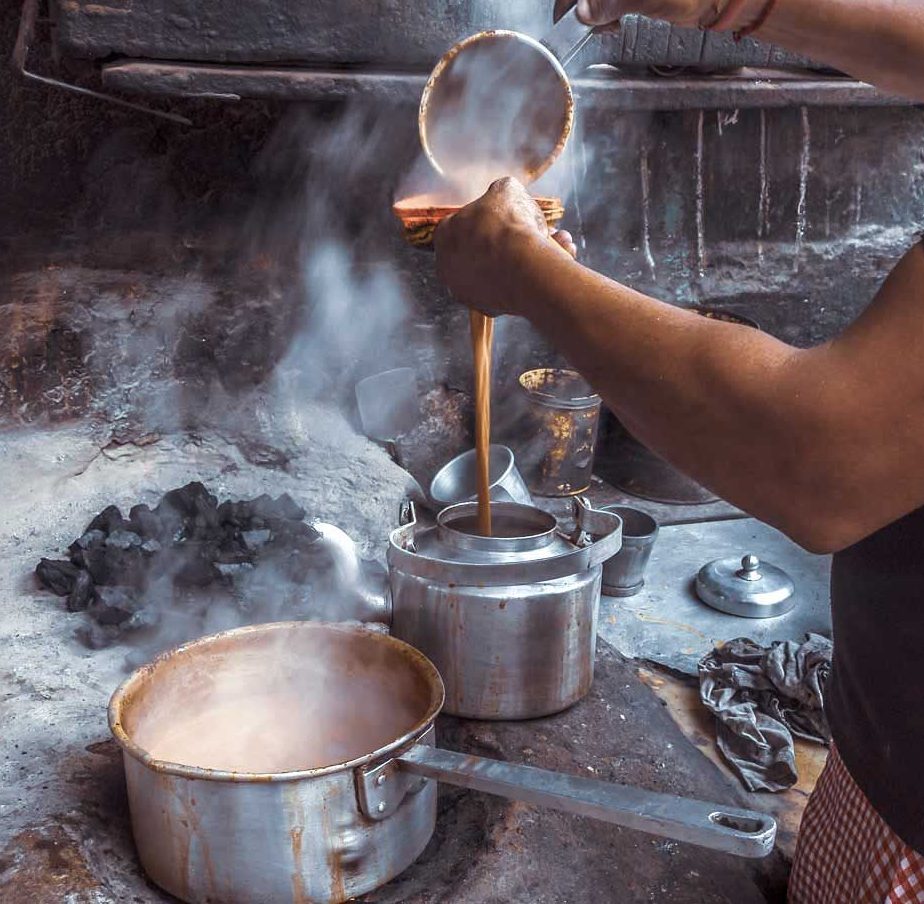
Somewhere on the Malabar coast, Kareem sits on a pier and brews his famous Suleimani chai—a Mughal-era concoction of tea, jaggery, lemon and spices found across the subcontinent. It’s just before dawn and a full moon looms in the bright indigo sky overhead. As he pours the tea into his glass, we can see the moonlight shine through the clear, amber liquid. He takes a sip and his face transforms into the very picture of peace and contentment.

In the background of this scene, Subhan’Allah is repeated melodiously in the style of a Sufi dhikr over a Middle Eastern string arrangement. Interestingly, the Arabic incantation سُبْحَانَ ٱلله (meaning ‘Glory to God’) is mixed with sargam notes, a staple of Indian classical music. The tempo and energy of the song rises gently as the inhabitants of the sleepy Kozhikode beach slowly wake up and staff members of Kareem’s Ustad Hotel begin the day’s food prep. Throughout this sequence, director Anwar Rasheed pays particular attention to how Kareem prepares his dum biryani, which is the stuff of local legend.

There are many reasons why I love this scene but mainly it’s because of the link Rasheed chose to make between food and the divine. In many faiths including Islam, extravagant consumption or overindulgence of food—also known as gluttony—is commonly acknowledged as a sin because it’s a sign of our biggest human weaknesses: greed and selfishness. This is compounded even more so in the context of a post-industrialist hyper-capitalist world where there are still so many who can barely afford to eat, and yet our politicians lie to us saying it’s all good because the middle class has grown exponentially over the last few decades.
But obviously Kareem’s humble eatery is different.
He makes food to feed the soul, not the ego. One of the main aspirations in the [Islamic] Sufi tradition is to attain a spiritual closeness to God by forgoing worldly preoccupations. Adherents of the ideology seek to go inwards and eventually gain control over their nafs or ego. Aspiring Sufis often have to complete long and difficult initiation rites designed to break down their ego (a mighty task) before being admitted into an Order. Only through this can they become vessels for God’s love and mercy to shine through on Earth, and guide people to a softer and more conscious way of living. Much like the moon that glimmers through Kareem’s glass of Suleimani chai.
Very soon in the movie, it becomes clear that Kareem has forsaken a life of comfort for a life of authenticity, preferring to run a humble, community-driven business instead of a profit-driven one. His Sufi identity informs every aspect of his day to day life. He often goes out of his way to pay careful attention to the quality of his food, the well-being of his employees, and disadvantaged members of his community. Because the audience senses this before we even learn anything about him, his careful, almost meditative stirring of the giant cooking pot (with actual dhikr playing in the background) looks and feels like an act of worship onscreen. Anwar Rasheed and his team has managed to inject so much complexity within what was supposed to be a simple intro scene. Goosebumps.

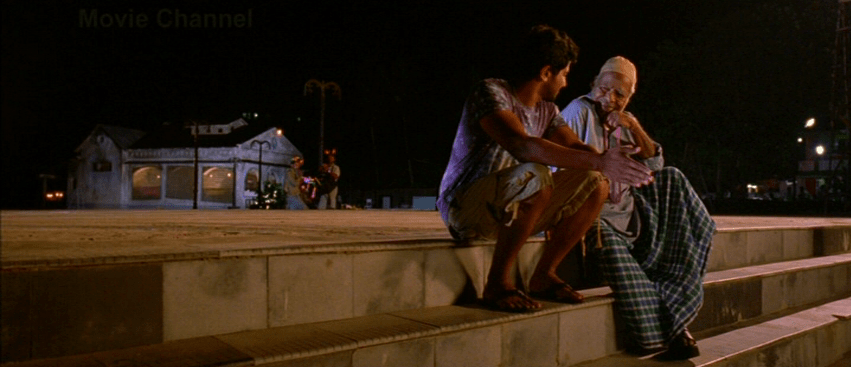
Thilakan as Kareem is, in one word, perfect. He imbibes his character with a natural warmth and joie de vivre and it comes out especially during his conversations with Faizi, played by Dulquer Salmaan. This comes through in many of his character’s personal aphorisms like, “Every meal should mentally satisfy the person too” and “Every glass of Suleimani should contain a little bit of love.” They may sound simple but they’re much harder to live by, yet that’s exactly what Kareem does day after day.
Thilakan conveys Kareem’s wisdom, humour and kindness with a soft twinkle in his eye or a smile that leaves lines all over his face whenever he’s talking to his grandson. There’s a reason he’s considered one of the finest actors in Indian cinema. With his easy-going charm and deep compassion for the people he works with, Kareem teaches Faizi to be a good human being, not just a good chef.
As you can probably predict, Faizi’s character goes through a significant shift after working with Kareem. He sees the hard work and love that goes into every meal made at Ustad Hotel, and carefully observes how the restaurant itself interacts with the community around it. Kareem doesn’t make it easy on Faizi either. He has to go through his own Sufi initiation rite of sorts before being allowed to even cook at Ustad Hotel, such as lifting heavy bags of flour, working the dishes, driving the van to get ingredients from town, and occasionally running a few specially designed errands. Errands like preparing a big meal for children at a special needs school and even driving all the way to Madurai to help Narayan Krishnan (who is a real person by the way), a dear friend of Kareem, distribute food to the poor. Krishnan, just like in the movie, was an award-winning chef at the Taj Hotel (Bangalore) who later left his work to feed homeless and disabled people in his hometown, after witnessing an incident that changed him forever.
All of this may sound a little cliche but to be honest, it’s a good habit to not judge movies by their cliches, but rather how the writers and directors present the cliches. There’s no such thing as a fully original idea or story and I feel like that applies to things beyond the movies as well. Sincerity and thoughtfulness behind the material can sometimes be more than enough to keep a movie buoyed. There’s a difference between cliches backed by solid writing and soul (thank you Anjali Menon), and the mechanical, mass-produced Christmas movies Netflix churns out every year. What separates Ustad Hotel from other foodie movies with similar arcs is the way everything is presented. Every scene sparkles with energy and spirit, and every element in the movie (be it the characters, the food or the locations) is filmed with a lot of love and care.
Here’s what Gopi Sundar, the man behind the soundtrack said about the songwriting and production process in an interview with The Hindu. I think it explains why this movie has enthralled so many people and remains a talking point to this day.
“If the songs are successful, then full credit to Anwar Rasheed’s smile! That smile is your undoing. All thanks to Anwar for setting up the right atmosphere for me to create the songs – he rented a beachfront apartment in Kozhikode, where the movie is set, for me and my team to relax and compose, and to get the feel and flavour of the place. Actually, I couldn’t have found a better setting than Kozhikode to inspire me for this particular film that has a very Malabar flavour to it. I was inspired by Moplah food, by college students who gather on the beach every evening to sing old songs, by the mix of the conservative with the modern that defines the city.”

Writers aur directors ho toh aise. And that’s why Ustad Hotel has stuck with me through all these years, and why I’ll continue to force people to watch it in the years to come.
 Monsoon Season
Leave a comment